
Reflection: Mission Ghana: Finding Myself
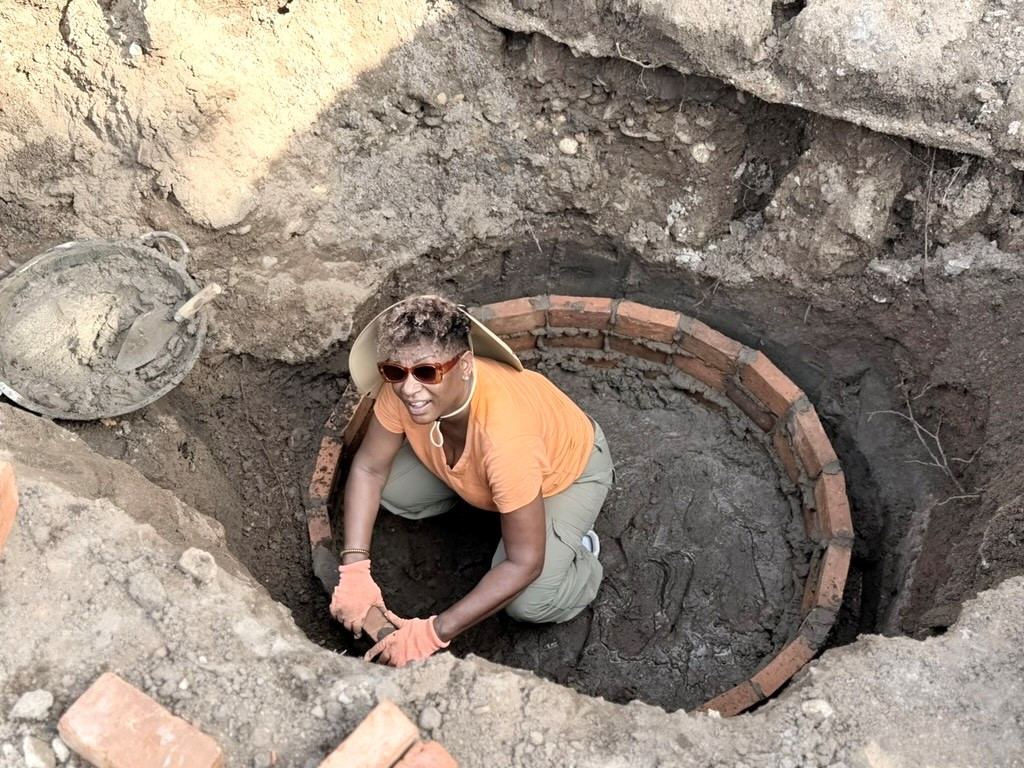
By Zion Banks, Editor, The Triad
Photo credit: Joceyln Bell
They say when you travel to learn about a place, it's tourism. When you travel to learn about yourself, it's a pilgrimage.
I recently returned from a pilgrimage to Ghana, the Gateway to Africa, and I am not the same person who boarded the plane at O’Hare 11 days earlier.
I imagine this is how Catholics feel after visiting the Vatican or how El-Hajj Malik El-Shabazz, known to many as Malcolm X, felt after his pilgrimage to Mecca. In the holy city, Malcolm experienced a spirit of peace, unity, and human dignity that transformed his worldview. He returned to the U.S. with a renewed sense of purpose and a deeper understanding of our shared humanity.
Human dignity was also at the heart of my journey.
As part of the Governors State University Global Health Brigade, I traveled to Ghana to serve alongside other students and volunteers. In a rural community of nearly 500 families, we worked side by side, building a biodigester, which is a three-part toileting system that will improve public health and quality of life for generations to come. Brick by brick, we created something tangible. Yet what the community gave us in return was immeasurable.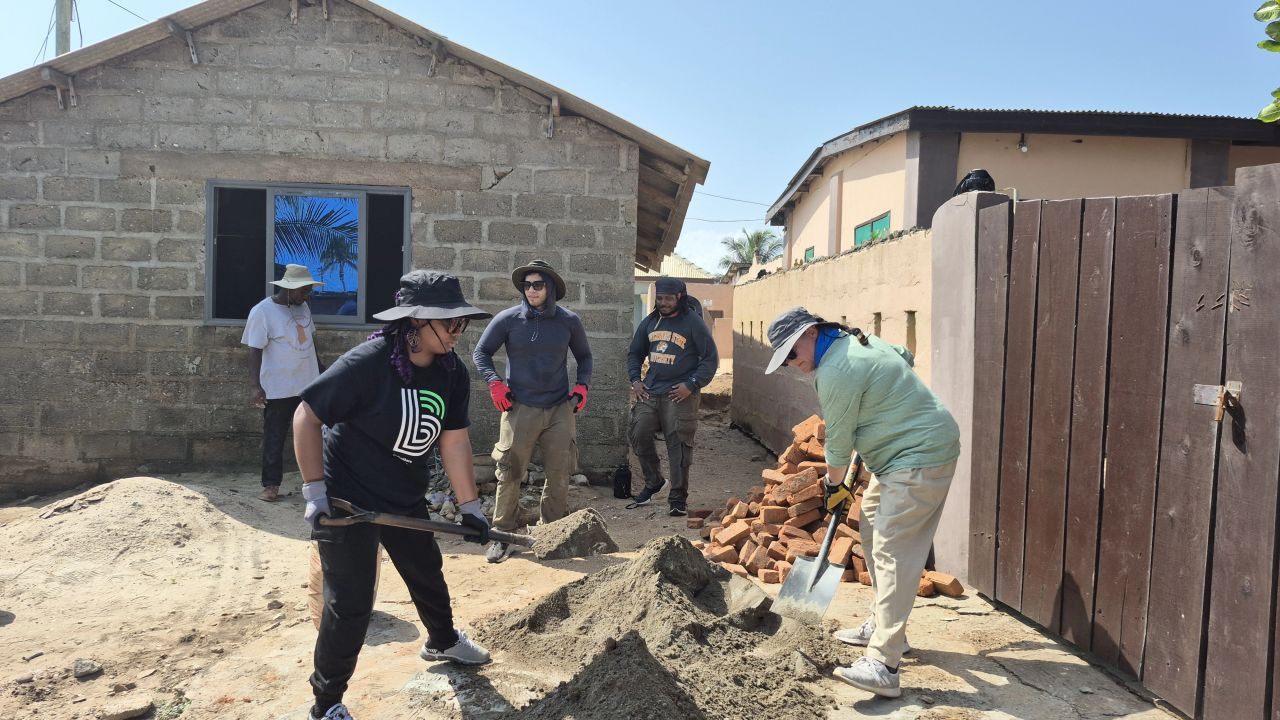
We laughed with children, shared moments with elders, and watched faces light up with surprise and delight when we greeted them in Fante, their native language. Those small exchanges reminded me that connection transcends borders, oceans, and even centuries.
But it was our visit to Ghana's sacred historical sites that touched me most deeply.
At the Donkor Nsuo River, known as the "Last Bath," millions of enslaved Africans took baths before being marched into dungeons. There, they were held captive, awaiting transport across the Atlantic into lives of unimaginable suffering. Standing in the river, I felt the weight of history in a way no textbook could ever convey. 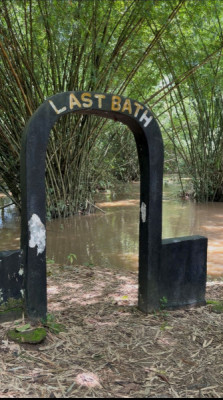 In just 11 days, I learned what felt like a year's worth of history about a continent too often misunderstood. Africa is home to 54 nations, more than 2,000 languages, countless cultures, and an enduring spirit that defies every stereotype. Ghana alone is home to more than 33 million people and over 80 languages. Rich in natural resources, culture, and tradition, it possesses a beauty and resilience that cannot be fully described. It must be experienced.
What surprised me most was not what I learned about Africa, but what I learned about myself.
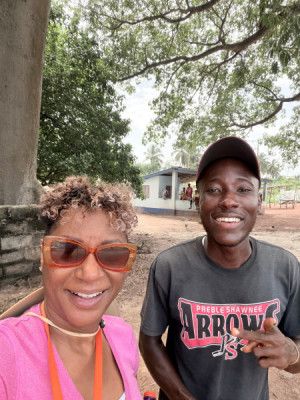 I felt an immediate and profound connection to the people I met. Their faces, expressions, laughter, and warmth felt familiar, as if I were surrounded by relatives I had somehow known all my life. There was an undeniable sense of kinship and an equally powerful desire to learn more about the story that connects us.
During the trip, I learned that my Fante name is Esi (E-say) given to girls born on a Sunday. What moved me most was realizing that my mother had told me this nearly 50 years ago. At the time, I didn't fully understand its significance. Looking back, I see her as a woman of wisdom and vision, quietly planting seeds of Africa within me long before I was ready to receive them. Watching the cool water rush over my feet at Donkor Nsuo River, I felt those seeds bloom.
At the site of the Last Bath, our guide shared a thought that has stayed with me: many descendants of the African diaspora feel called to return because our ancestors are calling us home.
Perhaps that's why Ghana launched its 2019 "Year of Return" initiative, inviting descendants of enslaved Africans to reconnect with the land from which their ancestors were taken. I arrived curious. I left transformed.
What I found was more than a destination. I found a deeper understanding of history, a stronger connection to my heritage, and a profound appreciation for the resilience, beauty, and humanity of the African people.
Some journeys change your perspective. Others change your identity.
This pilgrimage did both.
Zion Banks is a graduate student at Governors State University. This reflection is the first of a series of upcoming Mission Ghana posts -- a humble attempt to share a journey with Governors State University Global Health Brigades that will stay with her forever. Next: Mission Ghana: Connecting with My Ancestors.
Governors State University (GovState), recently voted the Best in the Southland, is a 4-year, comprehensive institution of higher education located in Chicago’s Southland. GovState serves nearly 4,500 students in four academic colleges: Arts and Sciences, Health and Human Services, Business, and Education and Human Development. Home to 2025-26 Men’s Basketball CCAC champions, GovState hosts 16 athletic teams.