
Reflection: Mission Ghana: Connecting with my ancestors
By Zion Banks, Editor, The Triad
It was the ancestral walk for me.
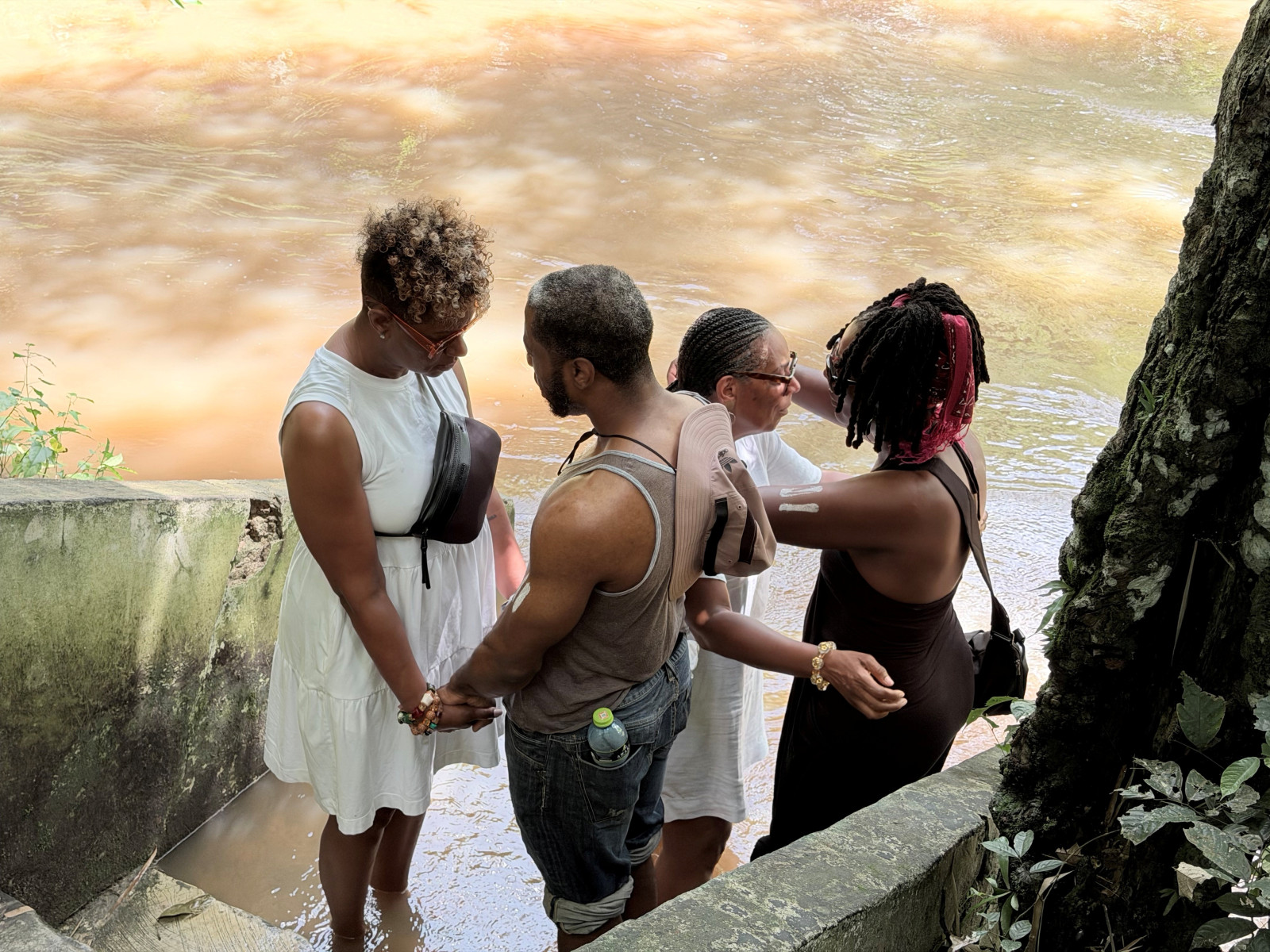
Barefoot and silent, we moved in a single-file line toward the Donkor Nsuo River. The path was short to cross Assin Manso Ancestral Park but the impact was immediate.
The exercise was designed to help visitors glimpse what enslaved Africans endured.
But there is no way to comprehend this atrocity.
In reality, an estimated 20 million Africans made the full journey to what is called the Last Bath. They walked for nine grueling months. They walked barefoot across brutal, rugged terrain. They were forced to walk in silence, their tongues held by a muzzle designed to cut their tongues if they dared to speak. 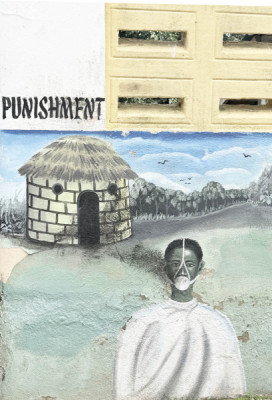
Now, standing here, I felt the cool water rush over my bare feet and over my ankles. I imagined how the water must have felt on their broken and scorched skin, abused by the sun and gun-toting captors.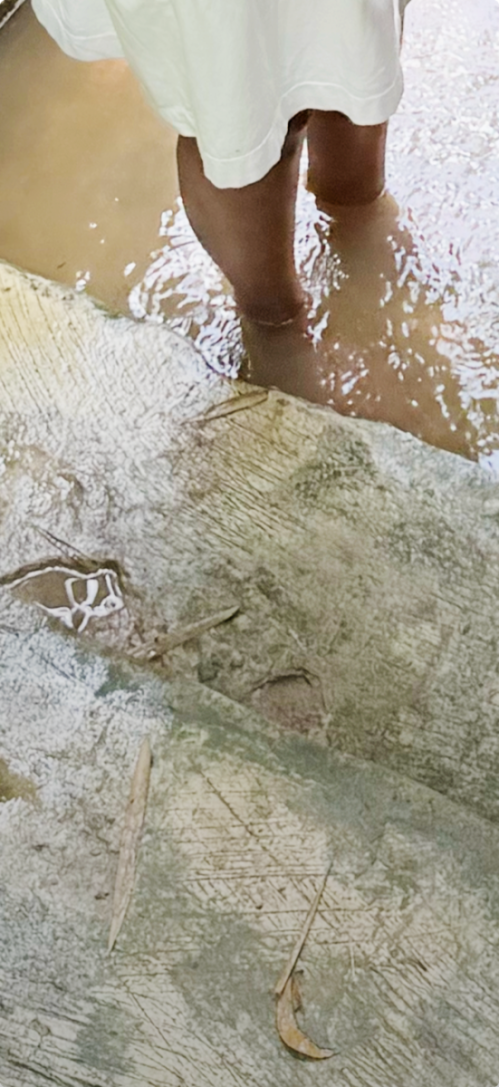
I wondered how many were left behind as prey to wild animals drawn by the scent of nine menstrual cycles of blood spilled on this unforgiving land.
After a ritual wash, their bruises were soothed with shea butter, the natural healer that made their melinated skin glisten. A sad irony is the captors wanted their human stock to look good because the strongest and the healthiest fetched higher bids.
Then, they were marched to the auction block.
Did they know, in those final moments, that it would be the last time they’d see their husbands, wives, children?
Out of 20 million torn from their homes, only half survived the journey to the dungeons, the hellish chambers where they awaited their fate in the new world beyond the dreaded door of no return.
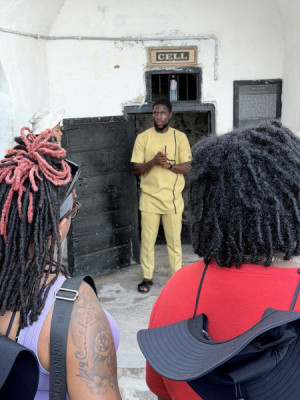 One hundred souls forced into spaces so small they had to stand for weeks. Darkness swallowed them, save for a thin sliver of light from above.
The dungeons sit beneath a fort-like structure. Black dungeons below. White Christian spaces above. Before this trip, I mimicked the narrative and called this place a slave castle, a reference to the pristine architecture. In truth, this is a dungeon where souls perished.
Between the fort’s open courtyard sat the Cell, the room of no return, a place where the fiercest tribal warriors, captured and broken, were dragged, tortured, left to perish without food, water, or air.
The survivors were scattered like seeds to England, the Netherlands, Sweden, the Americas, victims of cruelty and loss that began in the 1400s with the Portuguese and ended in the 1800s with the British.
Our guide at Assin Manso Ancestral Park made the ancestors’ journey personal for us. After leading us to the river, he marked each of us with mortar, symbolic of the dehumanizing path walked by those who came before us.
Devastated, struggling to hold ourselves together, we closed the tour. Then, unexpectedly, the guide smiled with joy and told us:
“Don’t be sad! The ancestors are happy you are home! Remember, you are African, because Africa is born in you—no matter where you were born.”
Let us carry this truth in our hearts across the globe so that we never forget.
Zion Banks is a graduate student at Governors State University. This reflection is part of a series of stories reflecting on her recent trip to Ghana with the Governors State University Global Health Brigade. Next: Mission Ghana: Unearthing Pride.
Governors State University (GovState), recently voted the Best in the Southland, is a 4-year, comprehensive institution of higher education located in Chicago’s Southland. GovState serves nearly 4,500 students in four academic colleges: Arts and Sciences, Health and Human Services, Business, and Education and Human Development. Home to 2025-26 Men’s Basketball CCAC champions, GovState hosts 16 athletic teams.