
Reflection: Mission Ghana: Unearthing Pride
By Zion Banks, Editor, the Triad
I can honestly say I’ve had the profound honor of seeing my name etched in stone—a moment that has moved me deeply.
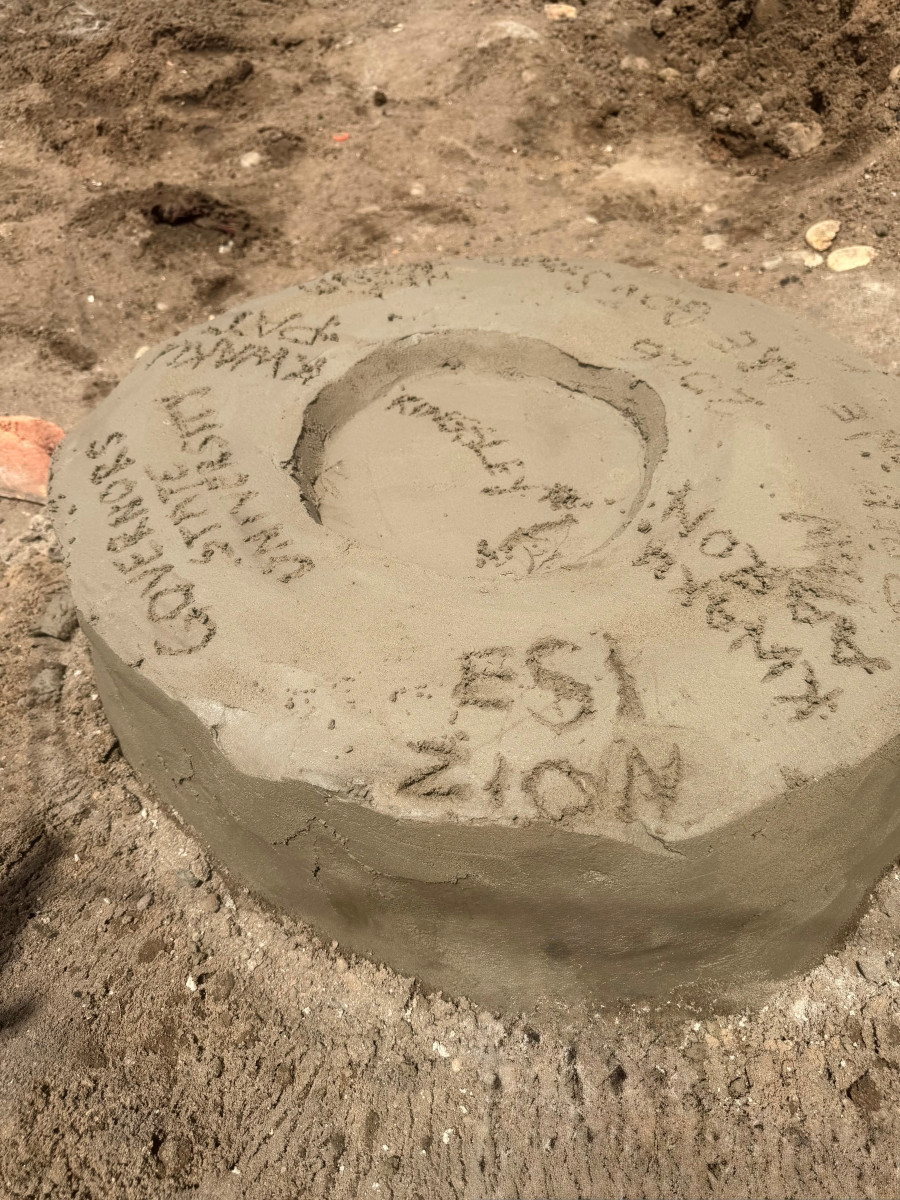
After four exhausting days of building a biodigester in rural Ekumpoano, Ghana, I picked up a small stick and carefully scratched my name into the lid of a unit that will serve a family of 15—men, women, and children. Before this, they shared a public toilet with 500 other families, and for many, open defecation was the heartbreaking alternative.
Standing there, I was overwhelmed—not just with pride and gratitude, but by something far deeper than the porcelain and pipes.
I had worked alongside dedicated Governors State University students and skilled Global Health Brigades artisans and interpreters, serving a community that welcomed us as if we were family. We shared laughter and shy smiles with children and elders who humored our clumsy attempts at Fante, their beautiful native language. Young men brought us supplies, and women carried water on their heads to the site. Together, we were one big working family, a feeling that felt both new and deeply familiar. 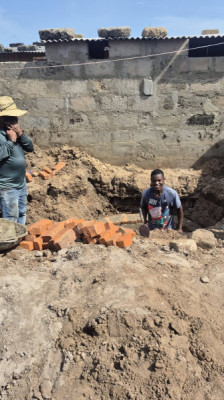
My heart drifted across the ocean to my own family, too. In the steady rhythm of mixing mortar and laying brick, I felt an unspoken tribute to my parents, who now walk with the ancestors. With nothing more than water, sand, and bricks, we built three units standing side by side, ready to transform the lives of those who live next door. My hands felt the weight of mortar and the stubborn truth of red clay bricks. I imagined my dad, with his exaggerated southern drawl, leaning in to ask, “Gurl, how’d you learn to do that!?” His spirit cheered me on through the scorching heat and sticky humidity, steady and strong.
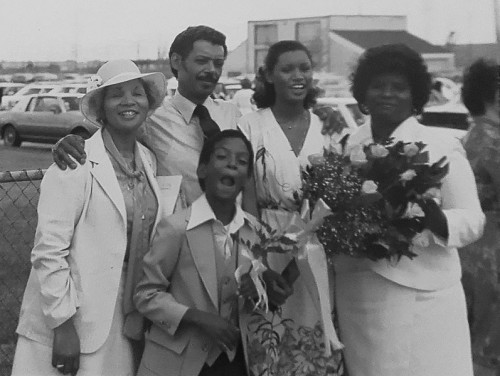 By the time we finished, I beamed like a peacock, despite my lingering stench. My dad, who retired from General Motors in 1994, was given a perfect attendance award after 30 years of work. Not a single day missed. It made sense then. He taught us that high honor is found in hard work, and that is exactly what I was doing in Ghana, carrying forward his legacy.
That hard labor reached deep into my mind, across oceans and time, to my ancestors taken from this very soil to toil 5,000 miles away in the American South. Now, I was standing in Ghana, serving its people. Was this a full-circle moment? A quiet cultural repentance? A feeling of guilt and haunting question of why I’d been given so much when there was so much suffering.
As we capped the unit and I traced my name into the wet cement, my thoughts wandered to my mother. Growing up, I often complained about my name. In a Chicago neighborhood full of Mississippi transplants, my name was always a puzzle. I was called Zine, Zi-ann, Zonya, Lasagna, anything but Zion. I openly wished for a simpler name, something like Patrice or Kim. At the time, I didn’t realize how much my words hurt my mom, who reminded me to be grateful for a name that held meaning. She promised one day I would understand.
That day came here, in this remote African village under the blazing sun.
Looking at my full Fante name etched in cement, I could almost hear my mother whisper, “See, Zion, your name holds power. It means ‘City of God.’ And don’t forget, it’s really pronounced Es-ay Zeeown.”
Zion Banks is a graduate student at Governors State University. This reflection is part of a series of stories reflecting on her recent trip to Ghana with the Governors State University Global Health Brigade. Next: Mission Ghana: Discovering Joy.
Governors State University (GovState), recently voted the Best in the Southland, is a 4-year, comprehensive institution of higher education located in Chicago’s Southland. GovState serves nearly 4,500 students in four academic colleges: Arts and Sciences, Health and Human Services, Business, and Education and Human Development. Home to 2025-26 Men’s Basketball CCAC champions, GovState hosts 16 athletic teams.