
From prairies to the Great Lakes: Turning passion into purpose
Alumna Abigail Latanich's journey as an aquatic scientist
From Staff Reports (edited by Sarah Shoaf, Staff Writer)
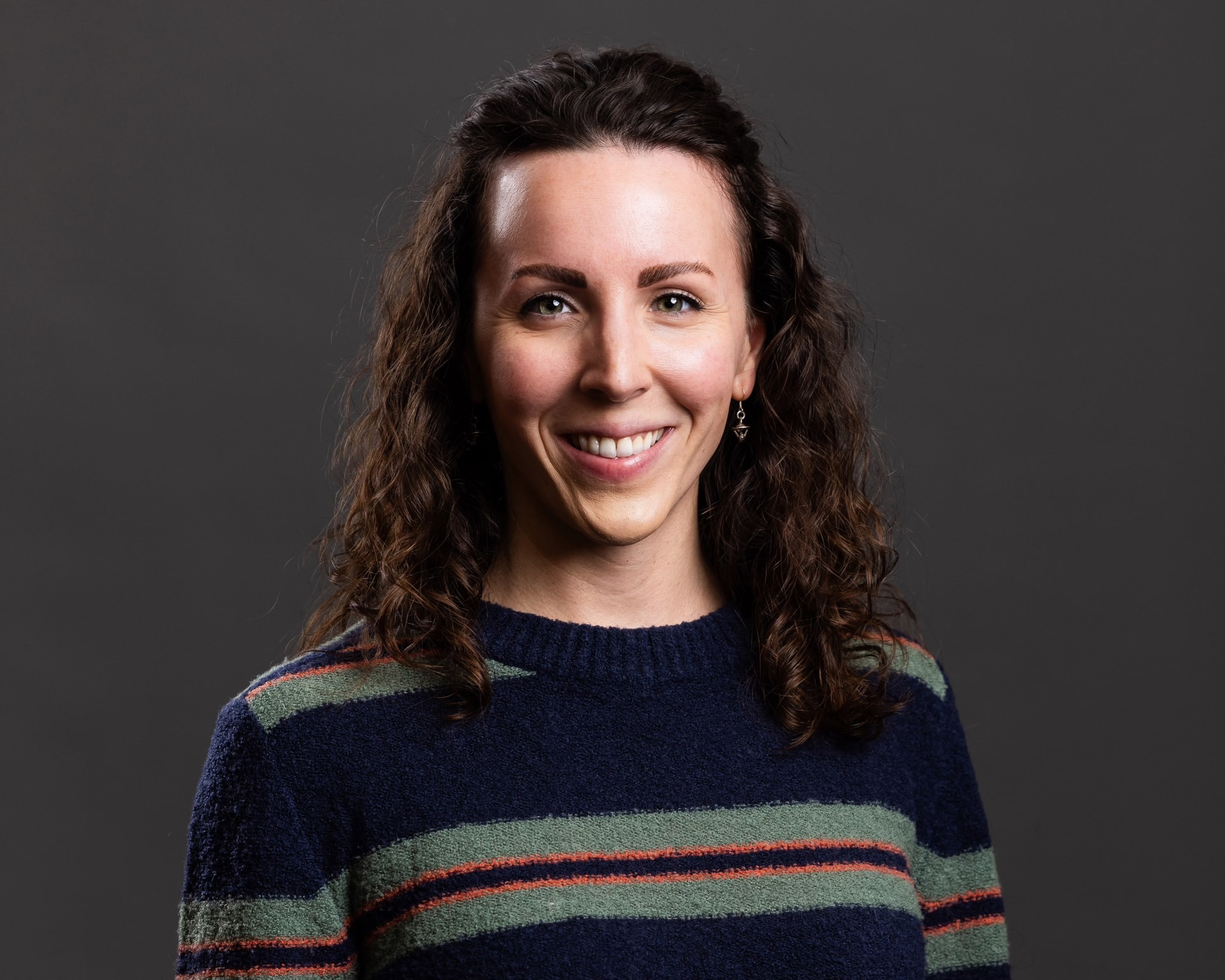
When Governors State University (GovState) alumna Abigail Latanich looks through a microscope today, she sees a microscopic universe that holds the secrets of freshwater ecosystems.
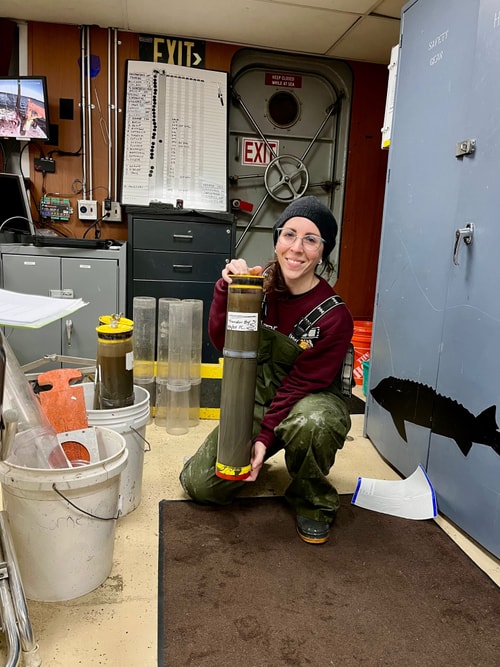
As an Aquatic Scientist at the University of Minnesota’s Natural Resources Research Institute (NRRI), she spends her days analyzing diatoms and protists, chasing ships across port cities to evaluate ballast water treatment systems, and conducting field surveys aboard research vessels in the middle of the Great Lakes.
Changing her approach to learning
For Latanich, her interest in the sciences began as a child when her parents took her outside to learn about the environment and to museums, planetariums, aquariums, and zoos. That interest grew at GovState, when she enrolled as a non-traditional undergraduate Biology student seven years after her last undergraduate class at University of Minnesota Duluth where she completed two years of coursework.
Latanich’s hiatus from education presented a steep learning curve where she found herself jumping into upper-level coursework for chemistry, mathematics, and biology when foundational material wasn’t fresh in her memory.
“To meet this challenge, I completely overhauled my approach to learning,” Latanich said. Working two jobs alongside a rigorous course load, she created notecards, gamified her study sessions, and developed time-management skills and organizational habits. Her discipline paid off: she graduated summa cum laude.
Finding support at GovState
Latanich noted that part of her success came from finding faculty who challenged her to think bigger.
“The university has many resources and professors who care. Professors always supported my ideas, creativity, and provided a tailored experience I wouldn’t find at a larger university,” said Latanich. “If I wanted to do something and drew up a plan, they’d help me make it happen.”
She noted two faculty stood out.
“Dr. Guimond and Dr. Gsell each supported and challenged me in ways I never expected,” said Latanich. “Dr. Guimond allowed me to use a spare room and hood to conduct an algae experiment from undergraduate research with Dr. Gsell.”
She added that Dr. Gsell believed in her at a time when she felt out of place being an older undergraduate. “The coursework I took with him, and the creative research he allowed me to pursue, laid the groundwork for my future,” said Latanich. “He also helped me secure an internship at Argonne National Lab.”
The spark that lit her career path
 During her internship, Latanich was introduced to RStudio and multivariate statistics to analyze microbial relationships against soil chemistry data. “Oh, I was hooked on the coding and stats—I really loved this part of the work.”
This experience helped Latanich secure a job with the U.S. Environmental Protection Agency (EPA) in aquatic toxicology where she worked for a couple years operating systems to support research initiatives including xenobiotic impacts on thyroid hormones in aquatic organisms.
“I was fortunate to work onsite during COVID-19 and built wonderful connections,” said Latanich. “This career helped me secure a Graduate Research Assistantship at the University of Minnesota, and upon completion I was hired as an aquatic scientist to complete the final years of the project from my thesis work.”
A highlight of her work as an aquatic scientist is participating in Great Lakes surveys, spending two weeks aboard a research vessel a few times a year.
“This is demanding but rewarding work, and probably my favorite thing about being an aquatic scientist—you are seeing the ecosystem up close and interacting with it firsthand. It’s very tangible, adventurous, exciting,” said Latanich.
Looking ahead, Latanich has her sights set on pursuing her Ph.D.
“I’m currently planning to pursue a Ph.D. in late 2027 if accepted into the program,” said Latanich. “This will occupy the next five years. In ten years, I hope to be continuing work as a diatom taxonomist and Great Lakes ecologist.”
Interested in applying to GovState's Biology program? Learn more here.